
Jane's Patisserie » Recipes » Best Baking Recipes » How to Make Swiss Meringue Buttercream – Back to Basics!
How to Make Swiss Meringue Buttercream – Back to Basics!

*This post may contain affiliate links. Please see my disclosure for more details!*
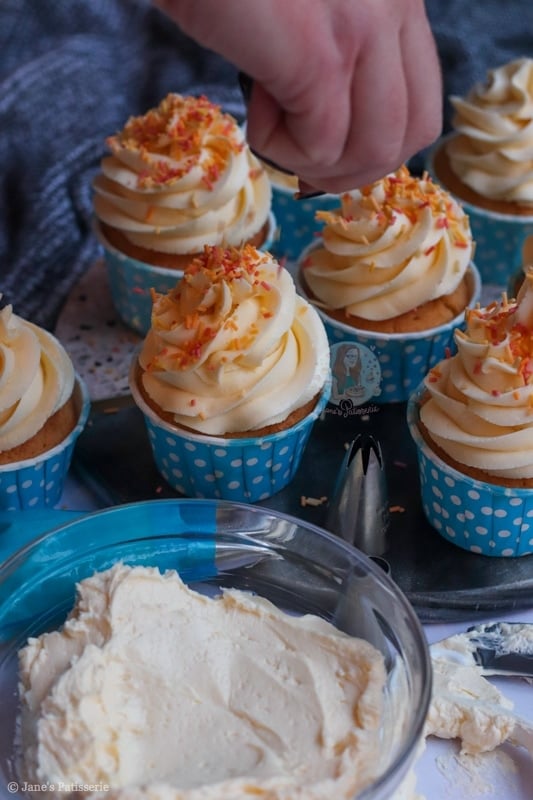
Swiss meringue buttercream is light, silky, the perfect level of sweetness and made using four ingredients. Usually ready within the hour, it’s the perfect frosting to top cupcakes, cakes and more.
I have tested this back-to-basics method multiple times, with temperature checks, timing expectations and the perfect how-tos for the best results.
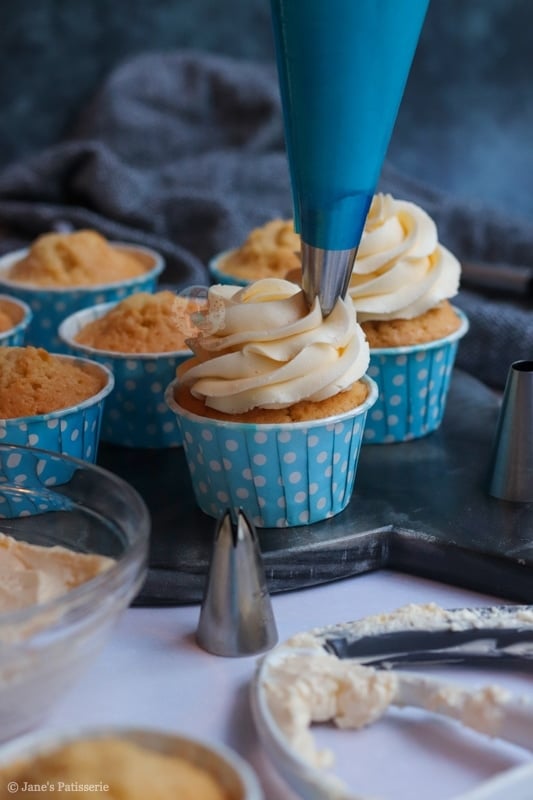
What is Swiss Meringue Buttercream?
If you aren’t aware, swiss meringue buttercream is different from the normal American buttercream frosting of unsalted butter and icing sugar, and different again to cream cheese frosting. It is genuinely a swiss meringue turned into the buttercream.
Many people like swiss meringue buttercream because it is ‘less sweet’ and has a more mousse-like texture. I would still say it is fairly sweet, just in a completely different way to the classic American buttercream frosting.
I don’t see anything wrong with the classic cake topping, as it is just so easy – but the taste of swiss meringue is just beautiful. It’s so light it is like eating a cloud – but it is a bit more time-consuming to make so be prepared.
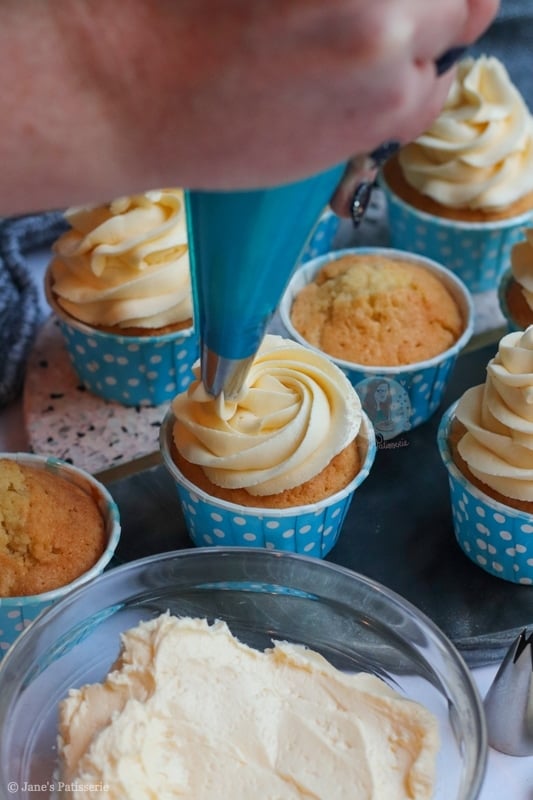
Ingredient notes and tips
- Butter – You need to use pure unsalted block butter – You definitely do not want to use stork, margarine, or a baking spread of any kind for this.
- Eggs – I prefer to use fresh eggs, splitting them from the yolk myself. You can buy cartoned egg whites which can work, but generally I do not buy these as I prefer fresh.
- Sugar – basic caster sugar (also known as superfine sugar or baking sugar in other countries) is best because of the granule size. You can use golden caster sugar to give an extra little boost of flavour
- Vanilla – this is optional, but I think it adds an unmissable level of flavour to the SMB. You can use any other flavouring though such as lemon, orange, almond, coffee etc. Try to use a super strong flavour so you don’t have to add extra liquids.
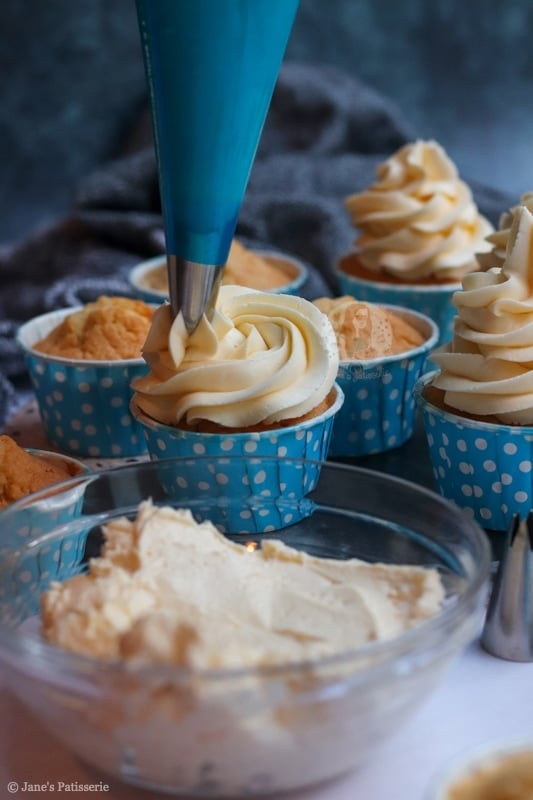
How to make the BEST swiss meringue buttercream
Full recipe in the recipe card below:
Prepping the butter
For SMB, you have to start with making sure that the block unsalted butter is at room temperature. You don’t want to heat the butter in any way to make it room temperature though, you need to leave it naturally. How long this takes depends on the time of year – peak summer is probably only 30-60 minutes, whereas peak winter may be the best overnight.
The butter wants to be at a temperature where you can press your finger into the butter to indent it really easily, but it’s not melting away.
Heating the eggs and sugar
With swiss meringue, you cook the egg whites out over a double boiler, whisking, until the sugar grains have dissolved. This takes a fair amount of time as you don’t want to go crazy with the heat, and the egg whites are meant to slowly heat using just the heat of the steam underneath.
For this recipe, I cook the meringues until they reach 72ºc – or 160ºf. Technically that translates to 71.11ºc, so I just went with 72ºc. It is so important to use a sugar thermometer when making this recipe as you really do need the temperature to be accurate! You can use regular sugar thermometers or a thermometer like this one.
When you are at this stage, other than checking the temperature, you need to carefully rub some of the mixture between your fingers – the mixture should be smooth. If there is a grainy texture, then the sugar hasn’t dissolved and may need to be heated further until it is.
I used a large glass bowl over a medium pan, with about 1.5” worth of water in the bottom. The bowl sits above the water, and doesn’t touch it – you want the water to be a simmer, so once it’s boiled, I usually leave it at a half level like 5.
Whipping and cooling
Whisk the mixture constantly, until it reaches the temperature, and then transfer to a stand mixer bowl – I will say that using a stand mixer is SO much easier than anything else, but an electric hand whisk is still better than just your arm and a balloon whisk. All in all, this recipe takes about 45 minutes to make, with about 25-30 minutes whisking.
When you whisk the eggs and sugar in a spotlessly clean bowl, you need to whisk the mixture until it reaches a lovely meringue with glossy stiff peaks and the bowl is completely at room temperature – this takes about 20 minutes, if not longer. The meringue MUST be at room temperature, so you don’t melt the butter.
If the bowl feels even slightly warm, keep on whisking until it has cooled. I whisk at about 6/7 on my KitchenAid mixer – and it’s a fair amount of time to be whisking for. If you don’t use a stand mixer, you are going to have to stand and whisk in the same way until it’s cooled.
Adding the butter and flavour
This is when you add the butter – you need to add small amounts of butter, letting it beat in fully each time. I switch my whisk to my paddle attachment at this stage as well. I add in about 1 tbsp of butter at a go – about 1” size cube of butter.
It is so important to not add too much butter, as it needs to mix in well. As you mix, the texture of the swiss meringue buttercream may change, and this is normal. You can find some troubleshooting tips below if you are worried!
Once all the butter is incorporated, add any flavouring such as 1 tsp vanilla extract, and beat for a further couple of minutes, scraping down the side of the bowl and making sure it’s combined. You should be left with a lovely delicious swiss meringue buttercream!
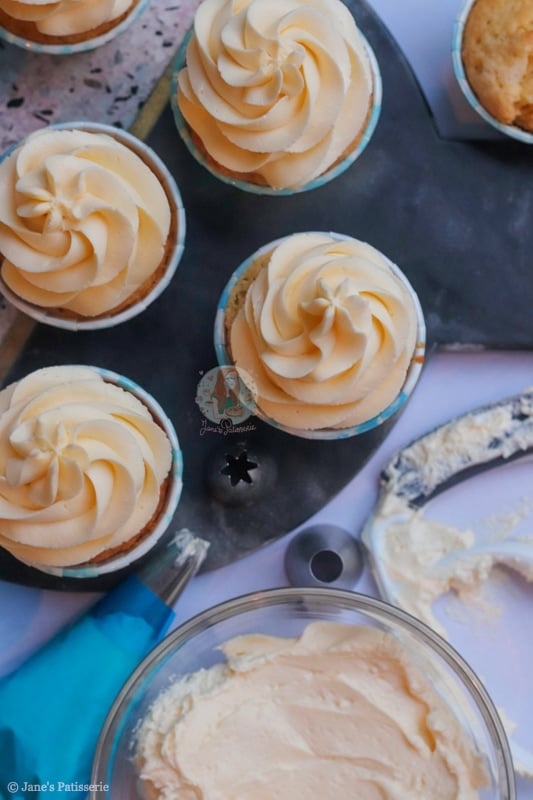
Troubleshooting
- If the mixture melts into soup, the meringue was still too hot. You need to cool the bowl in the fridge for 20+ minutes, or longer, and try to re-whisk. This process can be repeated, until it thickens and whips well.
- If the mixture turns lumpy, keep on beating. It can often look a little strange, but it’s worth beating out. If the butter was too cold however and you have flecks of butter, you need to gently heat the bowl, whilst mixing, with a hairdryer, to gradually heat until the butter has melted to make a smooth mixture.
- If the swiss meringue buttercream is grainy, the sugar wasn’t dissolved at the beginning, and you can’t fix this, unfortunately. However, as long as it thickens up still, you can still use it and enjoy it.
Other information sources for Swiss Meringue Buttercream: Liv For Cake, Natashas Kitchen & Sally’s Baking Addiction.
FAQs
How long does this last?
Swiss meringue buttercream can last for 1-2 days at room temperature, 1-2 weeks in the fridge, or it can freeze for 3+ months. Bring back to room temperature before re-mixing to become pipeable again.
How much does this recipe make?
This recipe is perfect to generously top 12 cupcakes, or filling and top an 8″ cake
Can I make less?
Yes – you can halve the amount easily, just make sure to measure it accurately. Timings may lessen due to the lesser ingredients
Can I colour this frosting?
Definitely! Gel or oil based food colourings are best as they are strong, and don’t have a competing ingredient inside.
How can I get rid of the air bubbles from mixing?
Once made, mix on a low speed, or gently fold, pressing out bubbles. Higher speeds = more bubbles.
Does this frosting crust over?
No – it doesn’t it does set stable, but it doesn’t form a natural crust like America buttercream frosting can.
Swiss Meringue Buttercream Recipe
How to make an easy and delicious homemade swiss meringue buttercream with 4 simple ingredients and a full guide for the best results.
Print
Pin
Rate
Servings: 12 cupcakes worth
Ingredients
- 170 g egg whites
- 275 g caster sugar
- 250 g unsalted butter
- 1 tsp vanilla extract
Instructions
- Make sure your block unsalted butter is at room temperature (see notes in the blog post).
- Make sure the equipment you are using is spotlessly clean. Any grease or anything else can ruin meringue really easily.
- In a medium pan, bring 1.5" worth of water to a simmer, and add a large glass bowl on top.
- Add the egg whites and caster sugar to the bowl, and heat over the simmering water, whisking constantly, until the mixture reaches 160ºF/72ºC (see notes in the blog post).
- Using a sugar thermometer or normal thermometer to reach the temperature, test the mixture carefully by rubbing some of the mixture between your fingers – there should be no grainy texture.
- This took me about 7 minutes.
- Once the temperature is reached, pour the mixture into the bowl, and whisk on a medium/high speed until the meringue is smooth and glossy, and the bowl is completely at room temperature. This took me about 20 minutes.
- The bowl should not be warm at all as it may melt the butter. Once the meringue is cooled, switch the whisk attachment to a beater attachment.
- Mixing at a medium speed, add the room temperature unsalted butter to the meringue 1 tbsp at a time (about a 1" cube of butter), letting the butter beat in fully each time.
- Once the butter has been added, add the vanilla extract and continue to beat for a further 2-3 minutes after you have scraped down the sides of the bowl.
- Decorate whatever cake you fancy – these quantities will work for 12x cupcakes, or a two layer 8" cake!
Notes
- Please read the blog post for my full tips & tricks on swiss meringue buttercream.
- Once made, this swiss meringue buttercream will last 2 days at room temp, or up to 5 in the fridge.
hello,
you say not to use margarine or stork but could you use dairy free flora plant butter if it’s the block butter rather than from a tub? thanks!
I have only ever used the flora plant based block one! and worked a treat for me!! 🙂 x
My first attempt at this recipe and it’s turned out so good thank you for an easy to follow recipe and plenty of good advice before starting will never use another buttercream again this one is perfect for me